China Phone Fatigue?
2023 (at least part) and 2024 were China’s ‘recovery years for smartphones shipments. After the previous 5 out of six years of seeing negative y/y shipment growth comparisons, China was ready for a replacement driven cycle. 2023 saw smartphone shipments up 6.5% y/y and 2024 saw shipment rise by 6.9%. That said, trade issues between China and the US and its allies continued to deteriorate culminating in the Trump administration’s onerous tariff declarations against China and other countries that had been buyers of Chinese smartphones. This began to become a major concern for the Chinese government and to make sure Chinese smartphone brands did not see their recovery weakening because of poor sales outside of the mainland, the Chinese government added smartphones to the list of consumer products that qualified under the country’s ‘New for Old’ subsidy program on January 20th of this year. This was to offset that external weakness.
As with most products placed in this program, the initial response from Chinese consumers was encouraging, with February smartphone shipments in China up 37.9% y/y. This continued into March (up 6.5%) and April (up 4.0%), but the subsidies primarily benefitted phones priced below $834 (The maximum subsidy came to ~$70 US). Over time however, the enthusiasm behind most subsidies erodes and as smartphones are constantly being discounted, there have been many opportunities to buy smartphones in China at or below subsidized levels. It seems that the subsidy ‘spark’ is facing a bit of fatigue, at least for smartphones, as May mobile phone shipments in China were down 21.8% y/y, indicating an obvious lack of momentum.
May (5-year average) is typically down ~3.5% m/m, with May 2025 down 5.3% m/m, but more importantly would be June, which typically is up (m/m) ~1%. If June is weak both m/m and y/y, it could signal the beginning of the end of the Chinese smartphone recovery, at which point the Chinese government is going to have to come up with some other form of financial engineering to maintain CE momentum unless they are willing to face negative mobile phone growth once again.
As with most products placed in this program, the initial response from Chinese consumers was encouraging, with February smartphone shipments in China up 37.9% y/y. This continued into March (up 6.5%) and April (up 4.0%), but the subsidies primarily benefitted phones priced below $834 (The maximum subsidy came to ~$70 US). Over time however, the enthusiasm behind most subsidies erodes and as smartphones are constantly being discounted, there have been many opportunities to buy smartphones in China at or below subsidized levels. It seems that the subsidy ‘spark’ is facing a bit of fatigue, at least for smartphones, as May mobile phone shipments in China were down 21.8% y/y, indicating an obvious lack of momentum.
May (5-year average) is typically down ~3.5% m/m, with May 2025 down 5.3% m/m, but more importantly would be June, which typically is up (m/m) ~1%. If June is weak both m/m and y/y, it could signal the beginning of the end of the Chinese smartphone recovery, at which point the Chinese government is going to have to come up with some other form of financial engineering to maintain CE momentum unless they are willing to face negative mobile phone growth once again.
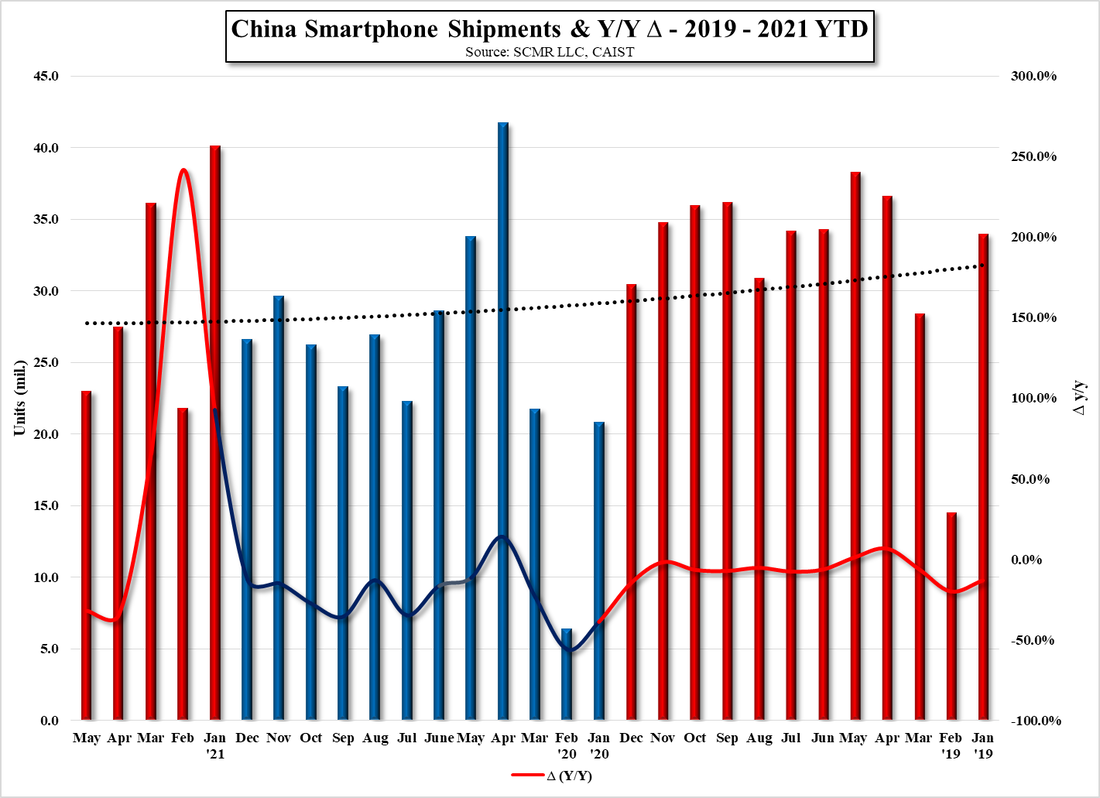
Figure 1 - China Mobile Phone Shipments - Monthly - 2022 - 2025 YTD - Source: SCMR LLC, CAIST






 RSS Feed