DRAM Again
We thought, after weeks of price gains that pushed prices above trendlines once again, that DRAM pricing might take a breather last week. We were wrong, in fact the price of DDR4[1] continued to rise making last week the fourth week in a row with price increases over 10% and pushing DDR4 to its high point for the year. Little has changed fundamentally as the broad switch by DRAM producers from DDR4 to DDR5 continues, along with demand for HBM, which is capturing capacity that might still be producing DDR4, leaving the market tight. It is expected that DDR4 prices will continue to rise into 2026. The current spot price of $17.68 is the high for this year, up from $2.93, reached on 3/5/25, for a gain of over 500%.
[1] DDR4 16Gb 2Gx8
[1] DDR4 16Gb 2Gx8
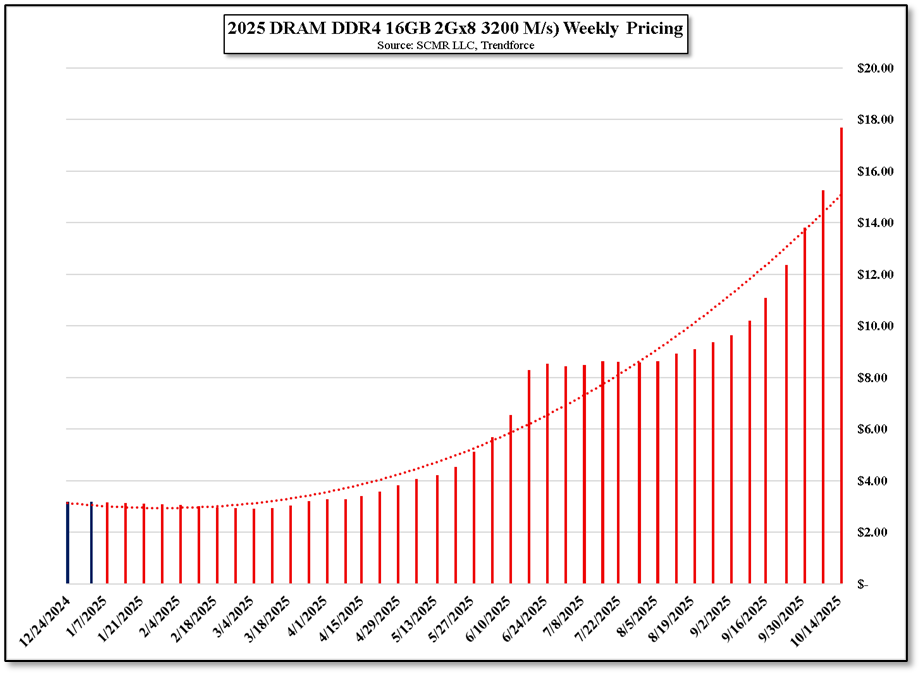
Figure 3 - 2025 DRAM DDR4 16GB 3200 M/s Weekly Spot Pricing - Source: SCMR-LLC, Trendforce

















 RSS Feed