Such suits are usually a result of a breakdown in licensing negotiations, and after considerable time and expense, usually result in a licensing agreement, but this one seems to be taking on another level of enmity, as an affiliate of Samsung Display has just filed another suit against JOLED, alleging it has violated three SDC patents that reference display electronics that go back as far as 2004. While JOLED has a very broad IP portfolio that it intends to defend, SDC has vast legal resources and can likely find additional alleged IP violations against JOLED to exert more pressure on the company to lift its initial claims. In the interim, lawyer’s kids are going to expensive private schools…
|
On January 14, we noted that Samsung Display (pvt) filed a lawsuit against Japan’s JOLED (pvt) alleging that both JOLED and Taiwan based monitor producer ASUS (2557.TT) have been violating one of Samsung’s patents entitled “Thin Film Transistor Array Substrate and Organic Light Emitting Diode Display Including Same” in the display of the ASUS Proart PQ22UC OLED monitor, a $3,950 device whose 21.6” OLED display was produced by JOLED. We expect the lawsuit was not entirely to protect SDC’s IP rights, but also in response to JOLED’s suit (in the same court) alleging that Samsung had been selling products that violated four JOLED patents since 2014.
Such suits are usually a result of a breakdown in licensing negotiations, and after considerable time and expense, usually result in a licensing agreement, but this one seems to be taking on another level of enmity, as an affiliate of Samsung Display has just filed another suit against JOLED, alleging it has violated three SDC patents that reference display electronics that go back as far as 2004. While JOLED has a very broad IP portfolio that it intends to defend, SDC has vast legal resources and can likely find additional alleged IP violations against JOLED to exert more pressure on the company to lift its initial claims. In the interim, lawyer’s kids are going to expensive private schools…
0 Comments
EUV (Extreme Ultraviolet) is the basis for tools that allow the patterning of fine lines in semiconductors as part of the photolithography process. As the light needed for defining these fine lines is less than the wavelength of traditional lithography processes, EUV’s shorter wavelength is the only tool available for producing semiconductors at 7um and below. There is only one manufacturer of such tools, Netherlands based ASML (ASML), so it is relatively easy to trace how EUV tools are selling and given that there are currently only two foundries that operate at 7um or less currently, tracing the units, which cost between $125m and $170m each, is possible.
ASML sold 31 EUV units in 2020, with a total of over 100 since shipments began in 2019. 31% of sales in that year were for EUV systems while in 2020 EUV represented 41% of sales or €4.5b ($5.466b US, up 60% y/y) and the company saw 4Q bookings for EUV reach $1.336b US. While the sales breakdown for 4Q 2020 represents all of ASML’s products, not just EUV, Taiwan represented 39% of 4Q sales and South Korea represented 31%, while China (12%), Japan, EMEA, and the US made up the remainder, which is similar to the full year breakdown of 36% for Taiwan and 31% for Korea. We note these numbers as Taiwan Semiconductor (TSM) and Samsung Electronics (005930.KS) are the two suppliers of 7um and smaller product currently, with China (under previous administration rules) unable to purchase such tools, given they might contain US made components or developed using US based software. ASML expects to ship 40 EUV systems in 2021, which would generate €5.8b ($7.04b US), over a 28% increase, with both customers adding capacity, with the possibility that a change in policy could reduce pressure on ASML to prohibit sales to China. At times in 2020 the company stated that some of its products could be sold to China without violating US trade sanctions, bet an change in policy could open EUV sales to Chinese semiconductor foundries, who would likely be first in line to pay for the chance to purchase EUV systems that would help them move to 7um or lower nodes on the Mainland where 14um is the current limit. On 12/18/20 we indicated that Chinastar (pvt) and parent TCL (000100.CH) were considering a project that would develop a new Gen 8.5 LCD fab. That project, which is situated in Guangzhou, also includes another fab that is dedicated to developing the production of flexible and rollable OLED displays using printing rather than deposition technology, with the LCD fab scheduled for production in late 2022 and the 2nd fab scheduled for 2024. While we were unsure about the capacity of T8 (the LCD fab) it seems that 180,000 sheets/month is the initial stated capacity, while the 2nd fab, which will have a larger footprint, remains open in terms of capacity.
This project is still in the early stages of development and licensing, although the site map below shows the 1.3m m2 of land that is under bidding for leveling. We expect the city will help to move the project licensing along rapidly as the combined project represents $6.87b in local spending, some of which will likely be funded by the local government. If you live in a city we expect there have been times when you sat down with your laptop, ready to release the day’s frustrations with a little PUBG, only to find that your Wi-Fi connection seemed to be lagging enough that your plans for battlefield domination were relegated to embarrassing losses to 10 year-olds. Your laptop has a Wi-Fi 6 modem and your ISP has guaranteed you at least 30MB/sec, so what is the problem? It seems that lots of others in your building were trying to do the same and Wi-Fi 6’s relatively limited bandwidth, forces some connections to be dropped if there are too many vying for the same spectrum.
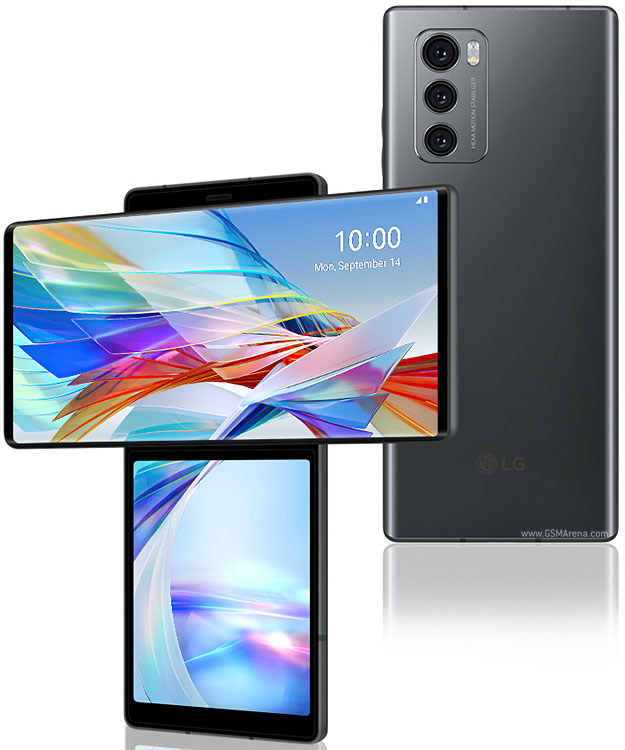
Wi-Fi 6 uses two frequency bands, 2.4GHz and 5GHz, and while like 5G spectrum, the 2.4GHz band is able to reach further but is slower, while the 5.0 band is faster but has a smaller reach. In theory the Wi-Fi 6 specs allow a maximum speed of 9.6GHz in either band, but on a practical level that is commonly closer to 1Ghz. to 2Ghz., but speed is not the problem, rather bandwidth, so your ‘performance issues’ on PUBG have more to do with the fact that a large number of users are trying to squeeze into these two bands, each with a need for an 80Mhz channel. If things get too crowded, some router requests will fail or channel size will be reduced, which means less data can move from that router and your game will ‘lag’. But don’t worry, because the FCC actually did something right last year and allocated another band, 6GHz to what is called Wi-Fi 6E to give a bit more bandwidth to users. In fact, the new band actually quadruples the bandwidth available to Wi-Fi, so there will be less contention for full speed data transfer requests, but there is a catch. Your modem has be equipped for Wi-Fi 6E in order to take advantage of the additional space. The good news is that if you are the first in your building to have a Wi-Fi 6E modem, you will have exclusive use of the very wide chunk of bandwidth, but without it, you will still be relegated to fighting over bandwidth with the family in the apartment below. Asus (2357.TT) released the 1st Wi-Fi 6E router, a spidery looking device, in October of last year in Taiwan (December in the US), for ~$450 (currently not in stock at Amazon (AMZN) but available at Bets Buy (BBY)), based on a Broadcom (AVGO) chip. Samsung (005930.KS) has also included a Broadcom Wi-Fi 6E modem in the soon-to-be released Galaxy S21 Ultra 5G, which we believe is the 1st smartphone to be 6E compatible. While only the US and South Korea have opened the 6GHz. band to Wi-Fi, there are a number of other countries that are expected to open that spectrum for public use this year, including the UK, Chile, Brazil, and the UAE, so we suspect Wi-Fi 6E will be included in many high-end smartphones later this year. LG Electronics’ (066570.KS)CEO sent an e-mail to the company’s Mobile Communications division that was intended to ‘calm’ them in anticipation of the company’s announcement of its financial results near the end of this month. The financial results are usually followed by a review of the company’s plans and expectations for each segment, and after twenty-three quarters of losses, we expect the Mobile division’s employees could use some reassuring words. The e-mail mentioned that mobile communication division employees, regardless of what decisions are made, will remain with the company ‘as a general rule’ and should not be anxious, although it certainly seems that management is about to make some changes to the division, which saw disappointing sales results from the company’s October 2020 release of the ‘Wing’ smartphone that has a second display that rotates 90⁰.
There has been considerable speculation that LG would sell or exit the mobile phone business, although that has been the case for a number of quarters, and affiliate LG Display (LPL) has recently halted LCD smartphone display production at the company’s AP3 fab in lieu of automotive display production, but as Apple has converted the iPhone family to OLED, there was little reason to maintain such production. The company seems to have reached a point (perhaps years ago?) when a real decision must be made concerning its mobile communications division, and is said to be open to all possibilities, but the lack of successful smartphone products would indicate that internal management and development is lacking and perhaps ceding the conceptual development and design to an outside source and use LG’s brand to market a new smartphone product might be a possibility. It’s a hard pill to swallow, but a smaller one than abandoning a business where it has competed for many years. JOHO. Despite the COVID-19 pandemic, CAPEX in the global semiconductor space grew 6% last year, primarily based on spending to add foundry capacity, which has been in short supply due to increased demand from consumer items that feed the stay-at-home lifestyle that the virus has caused. Growth in the foundry category was the only product segment that saw double digit growth in 2020, with most seeing negative CAPEX spending or a slight y/y improvement
Samsung is pushing to become the leading 5G equipment vendor as Huawei (pvt) faces considerable challenges from the US restrictions placed on it by the previous administration. It’s not that Samsung hasn’t sold telecom equipment to US carriers before, as they entered the US market back in 2004 when they signed a 4G deal with Sprint (pvt) and continue to supply Sprint with2.5GHz (Sub6) 5G equipment in certain locations. That said, T-Mobile’s (TMUS) purchase of Sprint puts those decisions in the hands of T-Mobile management, who announced last week that it had signed a 5 year deal with Ericsson (ERIC) and Nokia (NOK), which excludes Samsung from T-Mobile’s 5G plans which now include Sprint, including the 2.5GHz. 5G band that T-Mobile acquired as part of the acquisition. Samsung had also been working on a large 5G deal with AT&T (T), as it had been supplying 5G equipment to AT&T for 5G projects in late 2018, but last year’s deal with Verizon (VZ) might have lessened that opportunity. With T-Mobile and Sprint now out of Samsung’s realm, it’s Verizon all the way at least for now.
San Jose based Lumentum (LITE) is to acquire Santa Clara based Coherent (COHR) in a deal valued at ~$5.7b, a 49% premium over Coherent’s closing price on 1/15/21. The deal will be financed with ~$1b in cash, $3.178b in Lumentm stock, and ~$2.1b in new debt. The Lumnentum board will expand, with two new members from Coherent, with the deal expected to close in 2H.
While Coherent is well-known for its early entry into the commercial laser market and provides a wide variety of laser types for many applications, one of the most well-known in the CE space is the use of Coherent’s laser annealing products to change the structure of a-Si (amorphous silicon) to a more desirable poly-silicon structure that is used to produce LTPS Thin-film electronics that drive the bulk of mobile displays, both LCD and OLED. Lumentum is a broad-based supplier of optical products that range from optical interconnects to sensing components such as VCSELS and laser-based sensing components. The Coherent acquisition will broaden its sourcing and customer base and should be synergistic Both companies gave preliminary 4Q (calendar) quarter estimates when making the announcement, with LITE sales in line with consensus estimates and profits above, while Coherent’s preliminary estimates were both above consensus. Demand for LEDs has increased along with demand for displays generally during the COVID-19 pandemic. A number of LED suppliers have converted some of their standard LED production capacity to higher margin mini-LEDs, which has given producers the opportunity to raise prices for non-core customers. Core customers can negotiate more favorable pricing, but if they choose to do so, they face an extended lead time of up to 60 days as opposed to the 14-15 day norm. Now buyer psychology takes hold and seeing higher prices, buyers worry that increases will continue and leave them with progressively higher cost inventory heading into Chinese New Year in February and beyond. This incites them to begin to stockpile inventory to ‘avoid the upcoming price increases’, which increases demand and gives producers the opportunity to continue raising prices, essentially a self-fulfilling prophecy.
Epistar/Ennostar (3714.TT) was one LEE chip supplier who began converting generic LED capacity to higher margin mini-LEDs, which pushed some of their secondary customers to Sanan (600703.CH) and HC Semitek (300323.CH), who are seeing increased generic demand from Epistar’s former non-core customers. This coupled with an accident that limited production of patterned sapphire wafers used in the LED process have caused a ‘telephone-like’ chain of events that will likely drive LED prices higher over the next month, or until buyers realize that they have enough supply to satisfy 1Q demand. As we have mentioned a number of times in the past, 2021 will be the year of the mini-LED TV. This ‘interim’ technology that sits between older edge-lit LCD TVs and micro-LED TVs, a product that has the potential to one-day replace current display production methodologies. Mini-LED backlight systems give an additional level of control over the contrast (difference between the blackest black and the whitest white) of a display by increasing the number of LEDs that generate light for LCD pixels. LCD pixels themselves do not generate light, only acting as a ‘gate’ to block light or allow it to pass through the pixel. Once the light passes through the LCD pixel, which is made up of three ‘sub-pixels’, it passes to a color filter, which converts each sub-pixel to red, green, or blue. In understanding the complexity of an image that is shown on the screen, which is redrawn between 60 and 120 times each second, each sub-pixel’s information is a complex digital ‘word’ of 8 or 10 bits of information that tells each pixel how much of each red, green, and blue sub-pixel color should be presented, with 256 shades of each (that’s over 16.7m possible combinations). Here’s where the problem comes in however, as the LED backlight systems that are commonly used in LCD displays do not do exactly what they are told, in that when the pixel is told to ‘close’, or create a dark spot in an image, they do not close completely and some of the LED backlight leaks through, causing what should be a black dot to be a gray dot. Further, when an image contains bright and dark images in close proximity, the light from the ‘bright’ pixels leaks into the ‘dark’ pixels and also makes them gray. Therefore Ideally each pixel, or even each sub-pixel should have its own LED backlight, but with a 4K display having 8,294,400 pixels (that’s 24.883,200 sub-pixels), not only would that be an enormous number of LEDs, but they would have to be quite small considering there would need to be 41,209 LEDs for every square inch of a 65” TV screen. Typical high-end TVs have a few hundred LED ‘zones’, which are strings of a number of LEDs that operate as one, while mini-LED systems can have thousands, giving far more control over how the pixels and sub-pixels are lit, but even mini-LED systems, which are just beginning to appear in commercial products, have some limitations. The illustration below shows a grid of 1,600 pixels, just a bit under .2% of a 4K TV screen. Overlaid on that small segment is a mini-LED that provides the light for each of those 1,600 pixels. This would represent a 4K display with a mini-LED backlight with over 5,000 LEDs, a substantial number considering the commercial product that is in the market currently has ~1,000 zones, but it can be seen how the block of pixels is unevenly lit by the LED. In an actual device, there is a light guide, essentially a translucent sheet that spreads the light from each LED to a wider area and reduces the bright point in the center of the LED, but at the same time, this defeats some of the effect of using large numbers of LEDs to get contrast granularity on a pixel by pixel basis. Mini-LEDs are an interim step toward solutions that allow for image control on a pixel by pixel basis, but the limitations of LCD technology force an increasing number of progressively smaller LEDs to be used over time. The mechanics of processing and constructing higher density mini-LED backlights presents both physical and financial challenges that will allow the mini-LED backlight space to grow, but will eventually lead to more practical systems. What makes mini-LEDs attractive now is that they continue to improve the quality of existing LCD infrastructure, which represents multiple trillions of dollars of investment and a well-developed supply chain. We expect the mini-LED segment to grow for the next few year, with considerable competition developing in 2022 and beyond, as the technology to produce these devices is not radically different from what is used currently. Much of the cost associated with the production of mini-LEDs is based on production bottlenecks at two points in the process. The first being precisely moving these small die from production tape to their correct position on the display substrate. Typical pick and place devices can move between 2,500 and 3,500 chips/hour with moderate accuracy, which is adequate for low LED count backlights, but as the chips get smaller and more numerous, speed and placement accuracy become a big component of overall cost backlight, which ranges from $250 to over $1,000 for 65” TVs depending on the complexity, and can be as much as 20% of the display’s BOM.
Given the number of LEDs in mini-LED backlights, the 2nd bottleneck actually comes at two points in the process. As LEDs are produced on a polished circular substrate and are processed using typical MOCVD tools, a production wafer represents a large number of die. Not every die on the wafer will have the same characteristics, meaning color, intensity, or voltage sensitivity, so they must be classified according to those characteristics, a process known as binning, which puts those LEDs with similar characteristics in bins that determine their use and price. Mini-LED manufacturers have to determine first what bin level they will be using and must maintain that same level for each model, otherwise the backlights will be inconsistent and look and act differently from TV set to set. Once the bin quality (and price) has been determined, the chips are moved to the mini-LED substrate and attached to circuitry, where they must be tested to insure that each performs as expected and that there are no dead LED, either from damage or from poorly connected bonding and connections. If a bad or poor performing LED is found, the unit must be removed from the line and a rework process must be started, which increases cost significantly. At 5 9’s on a 10,000 LED production line, that would be a rework on ~10% of the devices. There are alternatives, with one already in production and another in development. OLED displays are self-emitting and do not use a backlight to generate an image. There are two types of OLED displays currently in production, the first commonly used in smartphones, and tablets. These displays use red, green, and blue sub-pixels to generate an image, and while the production process is a bit more complex than LCD production, such displays do not need either an LED backlight or a color filter. This cost savings is offset to a degree by the cost of OLED materials, but is a step above the performance of small panel LCD displays. In large OLED displays, the process is different however, as the substrate is coated with OLED materials that when electrically stimulated, generate white light. While each sub-pixel is white, a color filter is overlaid on the display, converting each individually controlled sub-pixel to red, green or blue. The cost saved by not having to precisely place red, green, and blue OLED materials on the substrate is offset somewhat by the cost of the color filter, but the process remains a self-emissive technology that does not use a backlight and has high contrast. OLED displays do have some drawbacks. They are more expensive to produce than LCD displays, and there is far less OLED infrastructure in the display space relative to LCD. That said, small panel OLED suppliers are beginning to compete with Samsung Display (pvt), the small panel OLED leader, and to a lesser degree trying to compete with LG Display (LPL) the large panel OLED leader. This additional capacity is moving the OLED space from one dominated by South Korean suppliers to a more global supply chain, but such changes not only take capital but expertise, which is something that has to be developed over time, so we expect OLED display technology will remain a growth industry for some time, albeit a more ‘homogenous’ industry than it was. That said, the anti-OLED marketing pitch has to do with the fact that each type of OLED material ages differently, and those differences can cause OLED displays to ‘burn-in’ when a particular image is left on the screen for an extended period of time. This causes the image to appear as a faint but visible ‘ghost’ on the display, however improving OLED materials and image manipulation has been lessening the issue, however it is still a rallying cry for competitive technologies. We mentioned that there is another alternative to mini-LEDs that is micro-LEDs. While mini-LEDs are used to enhance existing LCD displays, micro-LEDs are more like OLED than they are like LCD, in that they are self-emissive. Micro-LEDs are much smaller LEDs that do not use a backlight or a color filter to generate an image, in a similar fashion to RGB OLED displays. In a micro0LED display, there would be an LED for every sub-pixel, which, as we noted, would mean that there would be almost 25m micro-LEDs in a 4K display. This is a considerable amount more than 10,000 mini-LEDs, which are a bit of a logistical challenge, so a 4K micro-LED display becomes almost 2,500 times such a challenge. The size of the LEDs necessary to fit that many in such a space would mean far smaller die and therefore a far more difficult task to move those die to a display substrate, and in fact, there are many methods being explored as to how to move such vast numbers of such small chips in a cost effective way, including mechanical stamps that pick up and place thousands of chips at a time, and ‘floating’ the chips in a liquid across the substrate (among others). Again the specter of 5 9’s appears here, but even more so, with a 4K micro-LED display averaging 249 dead pixel for each display, along with an infinitely more difficult rework process. Micro-LED development will continue over the next few years and specialty micro-LED displays will show up sporadically, but they will be prohibitively expensive until solutions for the above are found, so while we expect there will be some consumer confusion between mini-LED displays and micro-LED displays, there is a vast difference between the two. All in, Mini-LED backlights will proliferate over the next few years and will help to extend the life of LCD display architecture, along with quantum dots, a technology we will cover separately, and will, at least from a marketing point of view, challenge OLED displays to a degree. That said, we expect both to coexist, and while mini-LEDs will see cost decreases based on improvements in process and scale, so will OLED technology, especially given the infrastructure investments made to date in the OLED space. Mini-LED density will have to improve considerably before it can truly compete with the almost infinite contrast that OLED displays provide. Whether the cost of the higher density mini-LED backlights needed to compete with OLED will be cheaper than OLED at some point is still an open question, although expectations are that such a point could come around 2025 or 2026, as timelines in the display space tend to be longer than early expectations. We expect it could be a bit later and we would be more inclined to believe that micro-LED research will push itself forward from a cost perspective more quickly than mini-LEDs, which are attached to LCD technology. Given that micro-LED displays would need to establish a new supply chain to enter mass production, albeit one based on LED technology, that will also add to the life of existing display technology, so when the headlines read ‘New display technology to replace XYZ (fill in LCD, OLED, etc.)”, take it with a grain of salt. |
AuthorWe publish daily proprietary market research focusing om consumer electronics and the global supply chain. The archieved notes represent a selection of our proprietary analysis and forecasts. please contact us at: [email protected] for detail or subscription information. Archives
January 2026
|
RSS Feed