This mid-band spectrum represents a balance of speed and coverage that is necessary for US carriers who wish to expand their 5G service, while able to maintain reasonable costs associated with the expansion. And is in the middle of what is called the mid-band of the three 5G segments. Winners have yet to be announced.
|
The FCC concluded its most recent 5G spectrum auction (107) last week, raising $80.916b for 5,684 licenses in the 3.7 – 3.98GHz. range. This auction was far ahead of expectations, which ranged from $35b to $51b and was almost double the previous highest auction’s results of $44.9b. The auction covered 411 cities with varying population, ranging from New York (2010 population 25.24m) to Van Horn, Texas (2010 population 5,874). It falls within the Sub6 category in 5G bands n77 and n78.
This mid-band spectrum represents a balance of speed and coverage that is necessary for US carriers who wish to expand their 5G service, while able to maintain reasonable costs associated with the expansion. And is in the middle of what is called the mid-band of the three 5G segments. Winners have yet to be announced.
0 Comments
a-nom-a-ly – Something that deviates from what is standard, normal, or expected[1]. Based on that definition 2020 was certainly an anomaly for many industries, with some seeing significant issues while others seeing unusual benefits. The CE space, on a general basis, was one area that saw benefits, with the COVID-19 virus forcing much f the global population to remain sequestered for extended periods, and moving the workplace from offices to homes. This lifestyle change had a profound effect on the display space, which is the ‘front-end’ of almost all consumer CE devices. Rather than use the word ‘unprecedented’, one severely overused last year, as part of our supply/demand modeling, we mapped out some detail on what 2020 really looked like in the display space. The simplest comparison van be made looking at large panel display shipments, which include any display above 9", which leaves out smartphones, but includes tablet, notebooks, monitors, and TV panels. Looking back to 2013, the greatest y/y change large panel shipments had seen was in 2018, when the industry saw a massive 7.1% increase in total large panel shipment. That said, 2020 saw twice that amount at 14.5% y/y, with only TV panel unit volume declining y/y. The table below breaks down each segment in 2020. [1] Oxford Languages – Oxford University Press Drilling down further to the quarterly level, one can see that the year was extremely compressed into the last three quarters, with little growth in 1Q, due both to seasonality and to the onset of the COVID-19 travel restrictions that limited production, with only TV panel shipments seeing all four quarters falling below ROC averages. The charts below indicate both 2020 shipments in each category and how they compare to the 5 year averages (2015 – 2019 in red) and in absolute shipments in the data set Fig. 6 – Fig. 9. If we compare the absolute shipment totals against 5 year averages, the table looks like this: The tables show that other than TV panels, each category grew substantially, however a portion of that growth would have to be attributed to what would be ‘normal’ yearly growth for each category, however if we compare shipments in 2015 to shipments in 2019 we can see the inherent growth rates are not always positive. Based on the table data above, in 2020, Notebooks and Monitor panels grew against negative 5 year shipment growth rates so we included a column for 3 year growth rates to give some perspective and smooth yearly variations. Against the 3 year averages Notebook panel shipments grew almost 4x times the averages while Monitor panel shipments grew over 6.5x the 3 year averages. TV panel shipments were the opposite, falling against both 5 year and 3 year averages, while tablets grew an astounding 8.8x against the 5 year averages and 8.6x against the 3 year averages. Total panel shipments grew 3.2x and 2.3x against the 5 year and 3 year averages respectfully.
So if we go back to the top of this note, 2020 was an anomaly, but where does that leave us as we head into 2021? Do we have a snap-back to ‘normal’, or is 2020 the ‘new normal’? That is not something we will cover in this note, as it is a summary of 2020 rather than a look into 2021 and beyond, however, given that the COVID-19 pandemic was the likely cause of the break from what might be called normal, much will depend on what happens to the infection rate and its impact on both global, regional, and country-wide economics and consumer psychology. Based on the above, our inclination would be to expect a return to more normal growth in each category, although the possibility of 2020 having ‘borrowed’ considerable growth from 2021 is certainly a possibility. Therefore, in weeks following, we will present a number of scenarios that make assumptions about COVID-19 and its economic impact this year, and match those scenarios against capacity scenarios. In the case of capacity, the effects of COVID-19 would have a lesser effect, but one that has already changed the capacity outlook for this year, with Samsung Display (pvt) and LG Display (LPL) postponing plans to reduce or eliminate much of their large panel LCD production. The above is the tip of the iceberg. Last October we mentioned UWB (Ultra-wide band) in reference to its potential use in the iPhone 12 (it became available in the iPhone 11) and as a way to precisely pinpoint the location of devices that are ‘tagged’ with a UWB device. Apple (AAPL) has been rumored to be releasing ‘Air Tags’, a UWB device that would allow tagged items to be located down to between 5 and 10 centimeters (2” to 4”), while Bluetooth and Wi-Fi can get you within a ‘few meters.” It seems that while Apple has included the chip necessary for such a product in the iPhone and the Apple Watch, a company called Tile (pvt) came out with such a device but uses Bluetooth which limits its accuracy, however Samsung released ‘SmartTags’ last week that would be the direct competitor to the Apple product, when it is released.
For $29.95 Samsung will sell you a tag ~1.5” device (.4” thick) that can be placed on any object that is easily lost. Bluetooth is used to find items close by, but if the item is out of your Bluetooth range (like being in the grocery store parking lot) any (?) Samsung Galaxy device will ‘see’ the lost item and inform the ‘Galaxy Find Network’ which will tell you where the device is located. Once you are close by, you can precisely find the device with UWB on your own device, even when the other Galaxy devices are offline, all done anonymously, without any user intervention. Samsung’s SmartTags also can be used for home automation, but precision tracking is the primary application. There is a hitch however, in that the currently released version, is Bluetooth only, which all Samsung Galaxy phones support, but the UWB version, SmartTags+ has not been given a release date, although it will be priced at ~$40, and would be compatible with only the Galaxy Note 20 Ultra, the Galaxy S21+ and the Galaxy S21 Ultra, all of which are equipped with UWB. The Bluetooth version is similar to a number of ‘tagging’ devices that are available currently, but the UWB device, when it comes out, will allow the user to overlay an image of the tagged device on the phones camera, which would show you that the tagged item is under couch pillows or in a pile of leaves. While these devices are relatively expensive, the amount of time, stress, and possible expense they save is immeasurable, and they will get less expensive over time. The Chinese trade press was abuzz with the notion that the US Department of Commerce, under the Trump administrations last two working days, would revoke at least one previously issued license concerning product sales to Huawei (pvt), and would reject a large number of license applications. This was based on a (unconfirmed) e-mail from the US Semiconductor Industry Association and a Reuters clip that stated that the Trump administration had notified Huawei suppliers, including Intel (INTC), that it is revoking certain licenses and intends to reject dozens of other applications.
Currently there are approximately 150 applications for licenses to provide product to Huawei from US companies, with an estimated value of $120b US, waiting for decisions, some of which have been in the hopper for months. As President Trump has been the instigator of the Huawei ban, which was initially put in place in May of 2019, the final decision on the licenses remains in his hands for the next two days. If he rejects a large number of those applications en masse, we would expect companies to refile within a short time, hoping that the Biden administration has a less stringent policy toward Huawei. While we do not expect the Biden administration to lift those bans placed by the previous administration, we expect a re-evaluation as to the impact of the more recent regulations that ban any company from supplying Huawei if they use any US made equipment in the design or manufacturing of their product, which has a significant effect on not only US companies, but many foreign companies, particularly in the semiconductor space that use US chip design software. Unfortunately, we also expect that this will not be a high priority for the Biden administration, given the COVID-19 crisis, but the timeline associated with the potential denials require companies to respond within 20 days, followed by a 45 day period when the Commerce Department would advise the companies of any changes, followed by a 45 day appeal window. That’s 110 days total, with the new Commerce Department having to respond by the first week in February. Samsung Electronics’ (005930.KS) Vice-Chairman and largest shareholder Lee Jae-yong was arrested in court yesterday at a remand retrial. As the leader of the company and the one responsible for approving all large M&A projects, there are fears that Samsung will enter another phase of uncertainty, similar to the last time the VD was imprisoned. Samsung has become a leader in the semiconductor space, with investments of $122b but little is expected to be invested during the imprisonment and trial period, at a time when Samsung is competing directly with Taiwan Semi (TSM), Global Foundries (pvt), and UMC (UMC). While Samsung management has likely been preparing for this possible issue, a senior official at Samsung explained, “At Samsung Electronics, small-scale investments or acquisitions can also be promoted by the business manager, but large-scale investments and mergers and acquisitions require Lee’s role,.” which says it plainly.
In 2017, when Lee was imprisoned the first time, the company instituted the Support Task Force which coordinated Samsung’s affiliates and was led by Samsung’s President Hyun-ho Jeong, but uncertainties about his ability to serve as a central leader remain. As the death of Samsung’s former Chairman Lee Kun-hee last year left open the plan for reorganization of governance, and managerial succession rights, along with an official inauguration, those plans, which would have been formulated by Vice Chairman Lee, are now on hold, along with his plans to finance the 12t won (~$10.85b US) inheritance tax that he must pay for his father’s estate. All in, it creates considerable uncertainty at a time when Samsung has the opportunity to push itself further in the global semiconductor market. Samsung Electronics (005930.KS) reveled the next iteration in the Galaxy S line, the S 21 series. The announcement is about one month earlier than the norm for Samsung although the actual release date will be January 29 (you can pre-order now). From a practical standpoint, while the S21 family is three models, the S21 and the S21+ are quite similar, while the S21 Ultra is a higher end device. The main difference between the S21 and the S21+ is the screen size, with the smaller being 6.2” and the larger being 6.7”, with both the same sizes as last year’s S21 and S21+. Last year’s models (March release) did not have 5G availability and obviously this year’s models do, but a better comparison would be against the October release of the Galaxy S20 FE, which did have 5G, but a 6.5” display. We expect Samsung used the display size reduction in the S20 FE to offset the cost of the 5G modem.
The most important feature however in the S21 and S21+ is the price, which is ~$200 lower than last year’s models, as it seems Samsung begun to recognize that while 5G and other features are certainly of interest to consumers, price is still an overriding factor and the consumer’s sensitivity to price has also increased. In order to bring down the price, aside from 5G modem cost reductions and the usual price pressure Samsung puts on its suppliers, the S21 and S21+ displays have a lower resolution than last year’s models, with this year’s S21/S21+ at 2400 x 1080 against last year’s 3200 x 1440. While this will lower the PPI (pixels/inch) a bit, we doubt it will be a big negative vs. a $200 price reduction. There are other improvements in this year’s models, such as the use of Corning’s (GLW) latest glass iteration, Victus™ instead of Gorilla Glass 6, although the back of this year’s models are plastic rather than glass, and an upgrade in the chipset (Qualcomm’s (QCOM) Snapdragon 888 in the US and China, which was produced on the 5um node), CPU, and GPU, while the camera setup is almost identical and the battery is slightly larger to compensate for the higher power draw of the 5G networking. The S21 Ultra is where Samsung appeals to those who want a bit more than a cheaper version of last year’s models, with a slightly larger but higher resolution display, Samsung’s 108MP camera, higher resolution selfie cam, a bigger battery and a higher price, albeit also ~$200 less than the comparable S20 model from last year which had a slightly larger display, somewhat different camera configuration, and a TOF, which is not in this year’s model. One big plus for the Ultra is the stylus option, which opens it to use with Samsung’s S-pen, which has been a staple of the Galaxy Note line in the past. While the stylus is a $40 option, it does lead users away from the Note line, which has been said to being considered for termination either this year or next, with the foldable smartphone line to be expanded as the top end of the Samsung Smartphone offerings. All in, the overriding factor in this year’s Galaxy S series is price. Samsung has taken this mandate seriously and is looking to price against Apple’s (AAPL) iPhone 12 series that was released late last year. That said, there is much in the way of branding that goes into consumer smartphone decisions which makes direct dollar for dollar and feature comparisons a bit difficult, but in this case not only is Samsung competing with Apple (and many others) but for those that do not mind owning last year’s Samsung model, it is competing against itself in that the Galaxy S20 FE 5G remains available at $100 less than the base price for the new Galaxy S21 5G. While this is always the case with last year’s models, the comparison below shows how close these models actually are, and while the table simplifies a number of the features where there are more subtle differences and newer versions (Chipset/CPU, etc.), we have highlighted the model with the most desirable features in as many categories as possible. Not every smartphone customer would agree on each, but investors can get a general view of how these smartphones compare. Chinese smartphone brand Xiaomi (1810.HK) was added to US Department of Defense’s ‘investment blacklist’ of companies that are alleged to be “Communist Chinese Military Companies” that operate directly or indirectly in the US. The recent (1/14/21) additions are as follows with previous lists available through the links below this list.
Advanced Micro-Fabrication Equipment Co. Luokong Technology Corp Xiaomi Corp. Beijing Zhongguancun Development Investment Center GOWIN Semiconductor Corp. (pvt) Grand China Air Co. Global Tone Communication Technology Co. China National Aviation Holding Co. Commercial Aircraft Corp of China. https://media.defense.gov/2020/Dec/03/2002545864/-1/-1/1/TRANCHE-4-QUALIFYING-ENTITIES.PDF https://media.defense.gov/2020/Aug/28/2002486659/-1/-1/1/LINK_2_1237_TRANCHE_1_QUALIFIYING_ENTITIES.PDF https://media.defense.gov/2020/Aug/28/2002486689/-1/-1/1/LINK_1_1237_TRANCHE-23_QUALIFYING_ENTITIES.PDF Under the executive order signed by President Trump, US investors are required to divest holdings in each of the blacklisted companies by 11/11/21, and while the list above certainly has ramifications for each company in terms of capital raising and stock price, it does not provide for the same trade sanctions as the US Commerce Department’s ‘entity list’ that prohibits all trade with list members without a license. That said, the DOD list does force all US companies that might have investments in list members to follow the same rules. While we expect the new administration to maintain a less stringent stance against Chinese companies that are alleged to be tied to the Chinese military or would be willing to give sensitive information to the Chinese government if requested (or that are strong competitors to favored US companies…), lowering the rhetoric and restrictions will likely not be a priority during the early days of the Biden administration, which could leave investors, funds and US companies in the position of having to decide whether to remove investments in companies on the list, despite the possibility that restrictions will be lessened or removed going forward. Xiaomi, who recently surpassed Apple as the 3rd largest smartphone brand, which likely triggered the ire of the outgoing President, has responded: “This announcement is made by Xiaomi Corporation (the “Company”, together with its subsidiaries, the “Group”) at the request of The Stock Exchange of Hong Kong Limited. The Company noted that the Department of Defense of the United States released a news release on January 14, 2021 (U.S. time) adding the Company to the list of qualifying entities prepared in response to section 1237 of the National Defense Authorization Act for fiscal year 1999 (the “NDAA”). The news release can be found at: https://www.defense.gov/Newsroom/Releases/ Release/Article/2472464/dod-releases-list-of-additional-companies-in-accordance-with-section1237-of-fy/. The Company has been in compliance with law and operating in compliance with the relevant laws and regulations of jurisdictions where it conducts its businesses. The Company reiterates that it provides products and services for civilian and commercial use. The Company confirms that it is not owned, controlled or affiliated with the Chinese military, and is not a “Communist Chinese Military Company” defined under the NDAA. The Company will take appropriate course of actions to protect the interests of the Company and its shareholders. The Company is reviewing the potential consequences of this to develop a fuller understanding of its impact on the Group. The Company will make further announcements as and when appropriate.” In a filing today, Chinese display leader BOE (200725.CH) has indicated it will be selling shares in a non-public offering to raise capital for a number of projects. Under the plan, BOE will buy a 24% stake in the company’s B17 mixed use Gen 10 fab, additional capital for the company’s B12 Chongqing Gen 6 OLED fab (under construction), capital for the company’s micro-LED project, additional financing for the BOE Hospital, capital to repay loans provided by the city of Fuzhou (likely for the B10 LCD fab), and for ‘supplemental capital’. We note that BOE has recently agreed to purchase stakes in two LCD lines from Panda for $1.1b US, so some of that ‘supplemental’ capital could be related to that purchase.
According to the preliminary filing, the total amount to be raised is ~$31b US, some of which has already been allocated to a number of Chinese investment funds and includes an 18 month lockup. The deal pricing will be 80% of the 20 day average stock price previous to the closing, with the capital (if completed) to be allocated as follows:
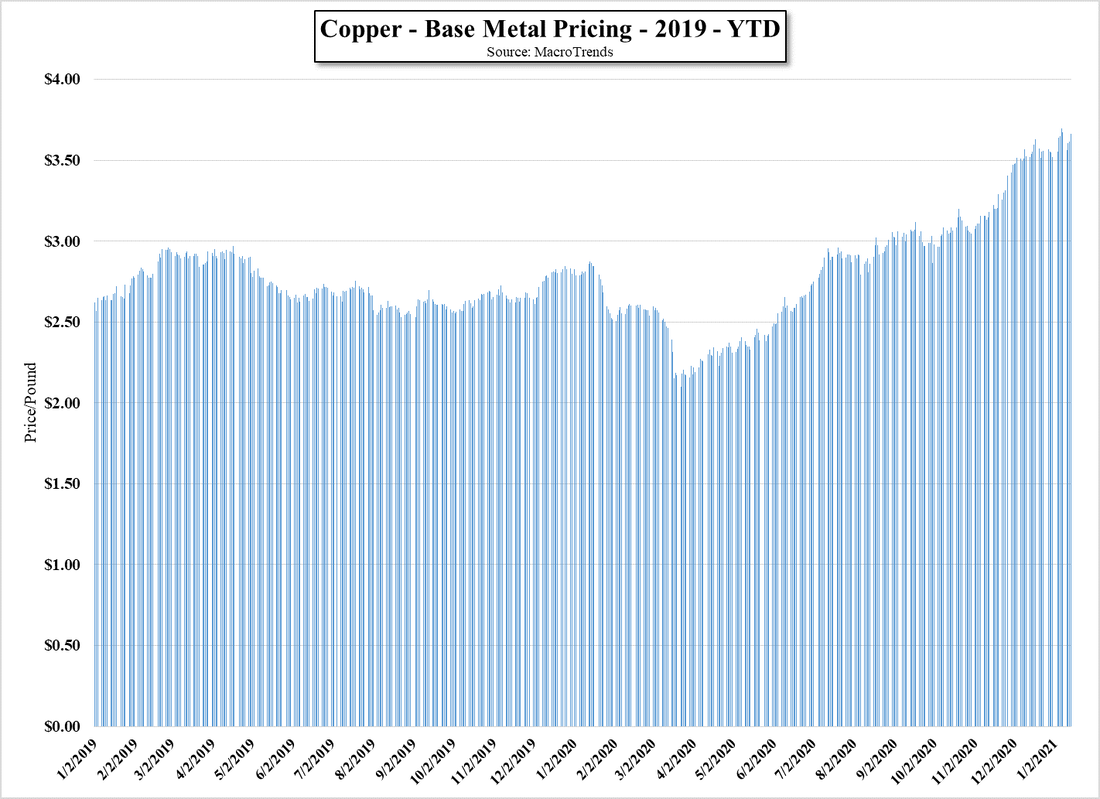
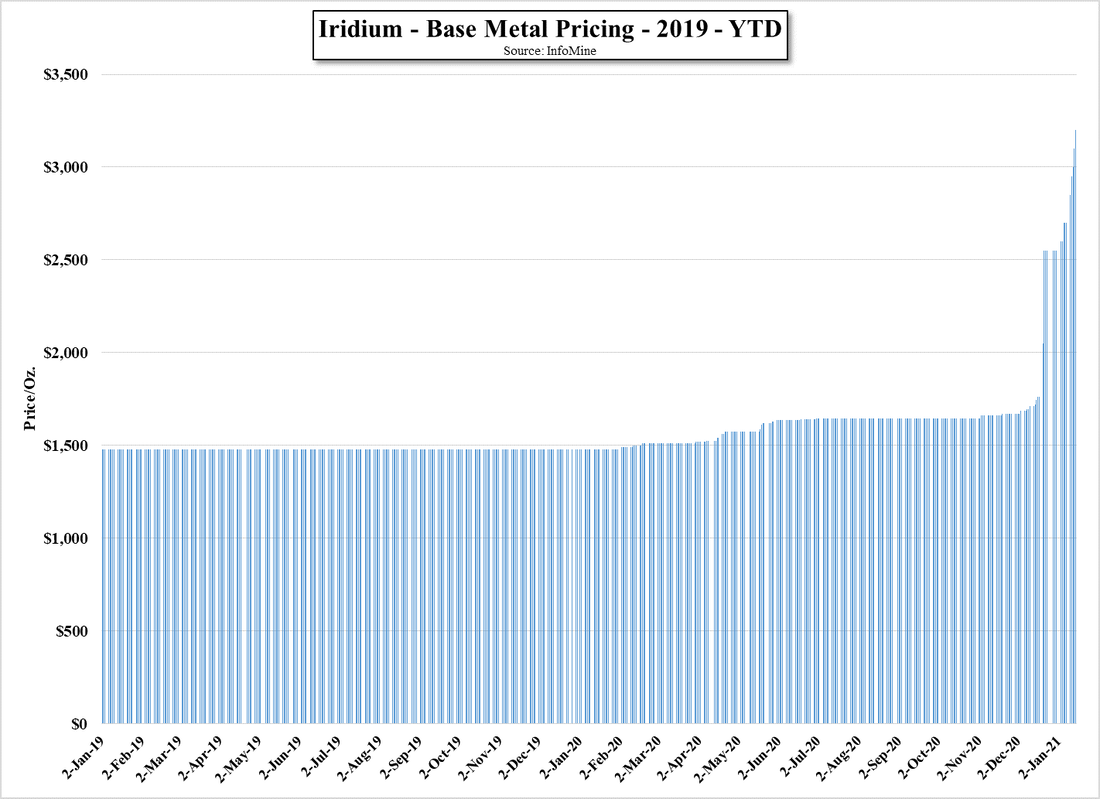
This is obviously a very large capital project for BOE, who has been expanding at a rapid pace over the last few years and a key piece of the financing puzzle for what BOE is able to accomplish going forward. We believe some of the funding is to give the company better control over how the fabs are being run by lessening local government representation, while significant amounts will be for construction projects that the BOE BOD has already approved, such as the new fabs and the micro-LED project. That said, the total investment BOE has committed to for the projects above is over $105b US, so this financing will likely not be the last. More details to follow. There are some materials that are key to the CE space, with the most visible being Copper. It is used in hundreds of CE applications but copper laminated PCB boards are of primary importance to almost every CE device. As we have been hearing complaints from suppliers as to the price and availability of materials, we checked on a few to see how the price of key metals has changed recently. Copper prices continue to rise and board manufacturers have been complaining about rising prices for copper clad boards since 3Q ’20, but it seems that many more necessary metals have also been rising, with some quite a bit faster than expected. We also checked the price of Iridium, a key heavy metal that is the basis for many phosphorescent OLED emitters, with that chart looking far more alarming than copper, almost doubling in price over the last few weeks. After viewing those two charts we went a bit further and checked a number of other metals that are key to the CE space and created the table below.
Apple (AAPL) has incorporated its “Mag Safe” technology in the iPhone 12 family, a system that makes sure your wireless charger is aligned with the phone when charging. The issue of concern is the addition of the 18 magnets that are part of the Mag Safe assembly in each of the iPhone 12 models, which have not been in earlier versions used in MacBooks. These magnets which look like strands of DNA, keep the charger in position while still allowing it to be separated from the phone quickly and easily. Mag Safe is a welcome addition to the world of charging and an improvement on similar magnetic charging systems that have a tendency to slip away from the charger or do not charge due to mis-location.
Unfortunately the addition of the magnets does have a downside to the 800,000+ folks in the US that have ICDs (Implantable Cardioverter Defibrillator) to treat a variety of high risk cardiac conditions. While much of the population that has these devices is over 65, there is an increasing number of conditions in younger patients, such as SDS (sudden Death Syndrome, VTAC, VFIB, that have little to do with age. While pacemakers keep the heart’s rhythm consistent, defibrillators only jolt the heart when they sense an irregular pattern that could cause blood flow to be reduced or halted. Early models delivered the charge through a lead that was implanted directly in the heart, while newer version leads are only subcutaneous, reducing the chance of inflammation. With batteries lasting years and device size getting progressively smaller, these devices can save lives within seconds, while sitting dormant (hopefully) for most of their useful lives. So where does the problem come in? A January 4, 2021 article published in HeartyRhythm, the journal of the Heart Rhythm Society, a non-profit organization that promotes education and advocacy for cardiac arrhythmia professionals and patients (over 5,000 members), that indicated a iPhone 12 (all models) placed near the chest of an ICD user, would disrupt the ICD at distances up to 1”. This would mean that carrying an iPhone 12 in an upper shirt pocket or suit/sport coat jacket would deactivate the defibrillator and leave the patient open to potential cardiac issues. While not limited to the iPhone 12 specifically, devices that charge magnetically or the chargers themselves, could cause the same issue depending on the strength of the magnets, so patients with ICDs should be suspect concerning any device that charges wirelessly.. |
AuthorWe publish daily proprietary market research focusing om consumer electronics and the global supply chain. The archieved notes represent a selection of our proprietary analysis and forecasts. please contact us at: [email protected] for detail or subscription information. Archives
January 2026
|


RSS Feed