Pressure
Smartphone brands are always under pressure. They need to compete with other smartphone brands on a feature-by-feature basis and are often unpleasantly surprised by a new feature from a competitor that they had not prepared for. The success or failure of a particular feature or application can make or break a model for an entire selling cycle and can give a new brand a blackeye that they never recover from (see sidebar). Given the pressure facing designers and the deadlines involved, it can be seen that some of said problems are the fault of overpromising features that failed to live up to the hype or others that have been pushed out to consumers in a not-quite-ready state in order to meet a deadline or compete.
Red Hydrogen
Red was a highly regarded professional video camera producer. The assumption after a year of delay, was that the company’s initial smartphone would blow away the competition with a spectacular camera and a holographic display. It turned out to have a mediocre camera, a fuzzy display, and a $1,300 price tag. It ended the RED smartphone line at one model.
Red was a highly regarded professional video camera producer. The assumption after a year of delay, was that the company’s initial smartphone would blow away the competition with a spectacular camera and a holographic display. It turned out to have a mediocre camera, a fuzzy display, and a $1,300 price tag. It ended the RED smartphone line at one model.
Blackberry Storm
Blackberry ruled the smartphone world until Apple released the first iPhone on late 2007. Blackberry’s had built-in physical keyboards, while the iPhone had a virtual keyboard. The Blackberry Storm, released in 2008 was the first Blackberry to have a virtual keyboard. The unit sold well initially but the keyboard did not work properly and almost all 1.5m had to be replaced by Verizon.
Blackberry ruled the smartphone world until Apple released the first iPhone on late 2007. Blackberry’s had built-in physical keyboards, while the iPhone had a virtual keyboard. The Blackberry Storm, released in 2008 was the first Blackberry to have a virtual keyboard. The unit sold well initially but the keyboard did not work properly and almost all 1.5m had to be replaced by Verizon.
In some cases, usually software related problems, fixes were made with OS updates relatively quickly, while others, with more pressing hardware issues, required more ‘stringent’ fixes. This is not a company issue, as it has happened to almost all smartphone brands, leader Apple (AAPL) and Samsung (005930.KS) included, along with smaller or long-past brands (see sidebar). That said, while all brands fall pray to these problems, brands tend to react to them differently, and with the influence of social media, things can escalate very quickly into a marketing nightmare.
Apple faced one back in 2010 with the iPhone 4 (Antennagate). It seems that by holding the phone in your left hand your finger ‘connected’ two parts of the internal antenna causing the signal to fail. Apple never reported the number of units replaced but we expect it was a substantial number.
In 2016 Samsung released the Galaxy Note 7, and within a few weeks there were reports of the device overheating and catching fire. This prompted a recall of 2.5m units and the replacement of 500k devices. Samsung eventually recovered over 96% of that model after cancelling it entirely.
Since then there have been many smartphone release issues, and we expect the need to meet deadlines has shortened the time brands are able to test phone hardware and applications in real world situations, so these issues will never go away. That said, Ai adds a new flavor to the mix, and one that will be even harder to control than in the past. As AI is both a standalone application and embedded in applications, the core AI architecture is pervasive across the smartphone and an issue with the AI function can be magnified by that connection. Apple is facing such an issue now, with the release of the iPhone 17 line which includes Apple intelligence. Only days after the release reports of three issues have surfaced.
Apple faced one back in 2010 with the iPhone 4 (Antennagate). It seems that by holding the phone in your left hand your finger ‘connected’ two parts of the internal antenna causing the signal to fail. Apple never reported the number of units replaced but we expect it was a substantial number.
In 2016 Samsung released the Galaxy Note 7, and within a few weeks there were reports of the device overheating and catching fire. This prompted a recall of 2.5m units and the replacement of 500k devices. Samsung eventually recovered over 96% of that model after cancelling it entirely.
Since then there have been many smartphone release issues, and we expect the need to meet deadlines has shortened the time brands are able to test phone hardware and applications in real world situations, so these issues will never go away. That said, Ai adds a new flavor to the mix, and one that will be even harder to control than in the past. As AI is both a standalone application and embedded in applications, the core AI architecture is pervasive across the smartphone and an issue with the AI function can be magnified by that connection. Apple is facing such an issue now, with the release of the iPhone 17 line which includes Apple intelligence. Only days after the release reports of three issues have surfaced.
- Scratch issues – It has been reported that the anodized aluminum frame on the iPhone Pro models is prone to chipping and scratching as the anodizing is weak at corners. Keys or coins can cause bits of the anodizing to come off. This year’s models saw a return from titanium frames to aluminum, and it seems the anodizing process is not perfect. Apple acknowledged the issue but says that what users are seeing is not permanent scratching but a ‘material transfer’, essentially residue from other objects (keys and coins again) could leave marks, some of which can be wiped away. No comment on the ones that cannot be wiped away.
- Connectivity (iPhone 17) – Wi-Fi issues which can cause skips in audio and disconnections when using iPods. The problems is thought to be an issue with Apple’s N1 chip, which means an immediate fix is unlikely but certainly a relatively small problem.
- Apple Intelligence – Apple Intelligence, which normally would supply ‘smarter suggestions’, ‘contextual insights’, and empower other creative tools, does not seem to be working for everyone. This is common to all four models. The AI continually askes users to download the application even though it is already present, with some stating that it started when the asked the system to revert back to the Siri animation from the previous version. Apple is aware of the bug and is thought to be working on an update but has advised users to try reinstalling Apple Intelligence, forcing the ‘settings’ application to close, or re-signing in to their Apple ID, although none of those fixes seems to work for all users.
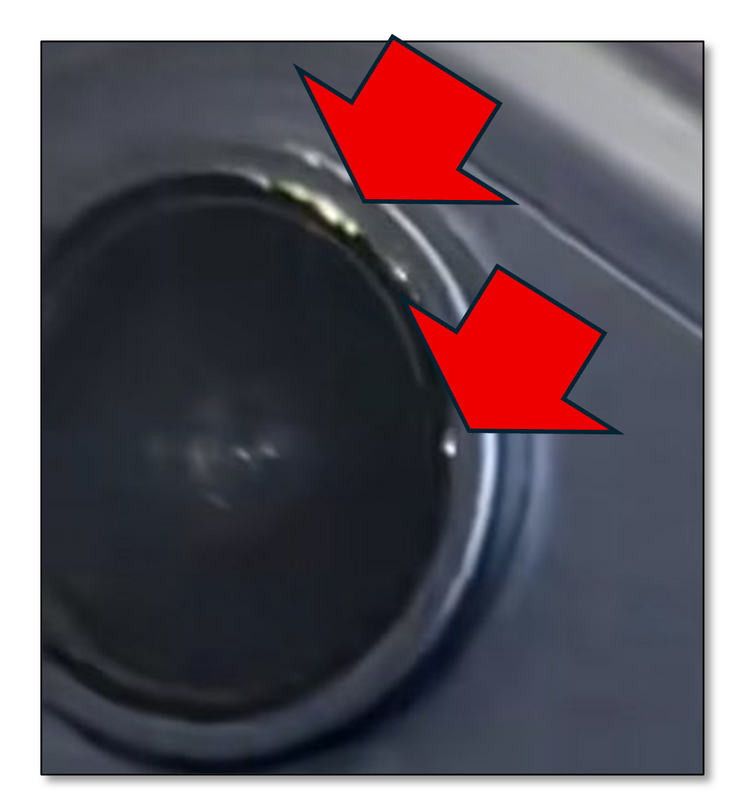
Figure 1 - Scratches around camera on iPhone Pro Max - after 1 week - Source: Jerryrigeverything.com

 RSS Feed