Target Practice
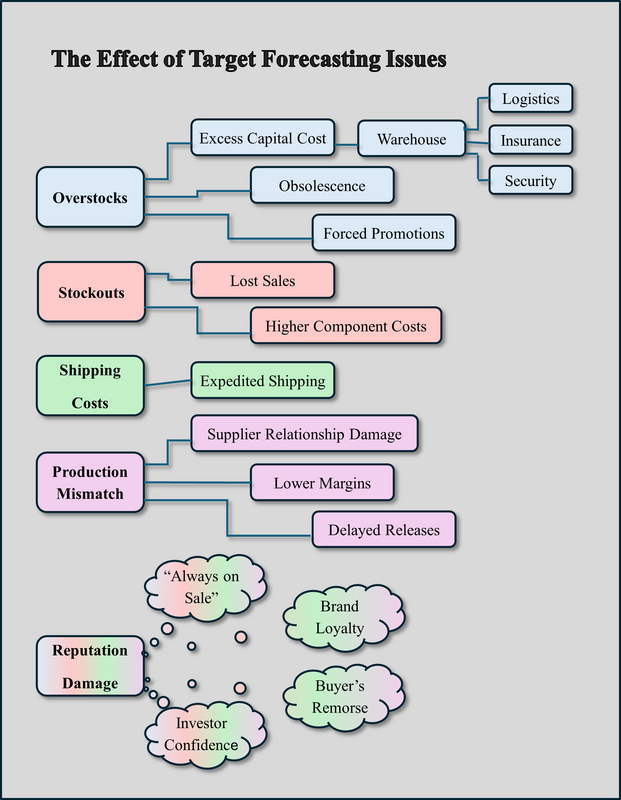
Targets are a big deal in the CE business, with both the supply and demand sides offering a few glimpses of their targets to the public, while saving the good stuff for their conversations with suppliers. Realistically, public shipment targets are little more than publicity, giving the general public a hint about the company’s level of confidence, but have no real consequences should they change over the course of a year. The targets companies share with their suppliers have very real consequences for both the companies themselves and their suppliers, who are trying to base their short and long-term production planning on both what they get from their customers and their own forecasts. Not only are accurate targets and forecasts important to suppliers, but they are also important to the company’s themselves, not only because of their own product planning, but because inaccurate or inconsistent targets or forecasts can increase the cost of components and/or delay product releases.
Most important however is the effect of poor target forecasting can have on a company’s reputation. Each category of poor target forecasting has a number of negative consequences however each contributes to the reputation damage that occurs when overly optimistic or pessimistic targets are set in the previous year, only to be adjusted a number of times as the year progresses. Consumers tend to see the promotions that might follow overstocking as “Hmm, if these items are already this low, they will be lower later in the year. I’ll wait”. They see stockouts as a gimmick to either upsell you to a more expensive product or to increase consumer ‘urgency’ in the short term. The higher costs associated with both scenarios are seen as ‘screwing over the little guy while the fat cats take home millions’, and anytime a recent buyer sees his or her purchase at a price below what they paid it generates buyer’s remorse.
None of these consequences of poor target forecasting are positive and while consumers might not know that these scenarios are the result of poor forecasting, the feel the results, which brings up a smaller but more lucrative class of consumers who might not be affected by poor forecasting at the retail level but are definitely affected at the financial level. Poor forecasting and large interim forecast changes might tangentially erode consumer confidence, but it more directly erodes investor confidence, and while next year’s shiny new models might help consumers to forget last year’s issues, investors take a long time to forget the impact when a stock they own opens down 10% or 15% after the company comes up short and lowers its targets for the year. That’s real buyer’s remorse…
Most important however is the effect of poor target forecasting can have on a company’s reputation. Each category of poor target forecasting has a number of negative consequences however each contributes to the reputation damage that occurs when overly optimistic or pessimistic targets are set in the previous year, only to be adjusted a number of times as the year progresses. Consumers tend to see the promotions that might follow overstocking as “Hmm, if these items are already this low, they will be lower later in the year. I’ll wait”. They see stockouts as a gimmick to either upsell you to a more expensive product or to increase consumer ‘urgency’ in the short term. The higher costs associated with both scenarios are seen as ‘screwing over the little guy while the fat cats take home millions’, and anytime a recent buyer sees his or her purchase at a price below what they paid it generates buyer’s remorse.
None of these consequences of poor target forecasting are positive and while consumers might not know that these scenarios are the result of poor forecasting, the feel the results, which brings up a smaller but more lucrative class of consumers who might not be affected by poor forecasting at the retail level but are definitely affected at the financial level. Poor forecasting and large interim forecast changes might tangentially erode consumer confidence, but it more directly erodes investor confidence, and while next year’s shiny new models might help consumers to forget last year’s issues, investors take a long time to forget the impact when a stock they own opens down 10% or 15% after the company comes up short and lowers its targets for the year. That’s real buyer’s remorse…
 RSS Feed