Under the Cushions
Yesterday we mentioned Samsung’s development of a 115” RGB LCD display for the consumer market that is expected to sell for ~$32,000, but at a recent exhibition LG and LG Display showed a micro-LED module that they jointly developed with the intent to produce a 130” commercial (not consumer) display. For perspective, a display of 130” is the equivalent of four 65” TVs, covers slightly over 50 ft2, has a height of over 5’ and a length of about 9 and a half feet.
The display itself would be constructed from a grid of 32 (8x4) 22.3” modules (shown below) that the companies jointly developed, using precision magnetic mounts that reduce the seam between the modules to as small as 0.1mm and are based on LGD’s Active Matrix LTPS backplane rather than physical circuit boards that have been used in earlier micro-LED models. Each module contains 259,200 micro-LED pixels, each with a red, green and blue sub-pixel, with each pixel only 0.738mm apart (on center). When in the 8x4 configuration the display will be 4K resolution with a 9:16 aspect ratio, a variable response rate of up to 144Hz, and will have an expected lifetime of ~100,000 hours, or 4,167 days (11.4 years of constant service), with no burn-in issues.
The one thing LG does not talk about is the expected price, although the company does not consider the device as a product quite yet, so we are left to make a few assumptions, especially as there are only a few comparable displays of this type and size, with even less at 4K resolution. As these displays are built to order we can only guess at the display price, which does not include a variety of controls and associated devices that are necessary to run such systems, but based on what we know about prices for these types of displays from Samsung and Sony (SNE), we can come up with a price per square inch. Based on a number of sizes and resolutions, we see prices (per in2) of $7.27 at the very low end (2K 1st generation PCB board modules) and over $27/in2 at the high end, excluding installation. Since this is LG’s initial stab at a B2B/commercial micro-LED product we would expect something over $25/in2 or $180,000 for the 130” model, but to be competitive we expect a bit less, so start saving those pennies today.
We do note that given LGs intense focus on large panel OLED, a micro-LED product goes against the grain a bit but given that rivals Samsung and Sony have both tapped into the B2B high-end micro-LED display market, they have little choice but to compete, even if it might rankle the company’s OLED focus. At least at this stage, prices for micro-LED displays are still out of reach for the average consumer and will likely stay that way for a few more years, so LG still has time to cash in on this rarefied market before it could disrupt the company’s years of OLED dominance. So we wait with bated breath for the eventual release of LG’s micro-LED commercial offering and continue to look under the couch cushions for pennies, nickels, dimes, and quarters.
The display itself would be constructed from a grid of 32 (8x4) 22.3” modules (shown below) that the companies jointly developed, using precision magnetic mounts that reduce the seam between the modules to as small as 0.1mm and are based on LGD’s Active Matrix LTPS backplane rather than physical circuit boards that have been used in earlier micro-LED models. Each module contains 259,200 micro-LED pixels, each with a red, green and blue sub-pixel, with each pixel only 0.738mm apart (on center). When in the 8x4 configuration the display will be 4K resolution with a 9:16 aspect ratio, a variable response rate of up to 144Hz, and will have an expected lifetime of ~100,000 hours, or 4,167 days (11.4 years of constant service), with no burn-in issues.
The one thing LG does not talk about is the expected price, although the company does not consider the device as a product quite yet, so we are left to make a few assumptions, especially as there are only a few comparable displays of this type and size, with even less at 4K resolution. As these displays are built to order we can only guess at the display price, which does not include a variety of controls and associated devices that are necessary to run such systems, but based on what we know about prices for these types of displays from Samsung and Sony (SNE), we can come up with a price per square inch. Based on a number of sizes and resolutions, we see prices (per in2) of $7.27 at the very low end (2K 1st generation PCB board modules) and over $27/in2 at the high end, excluding installation. Since this is LG’s initial stab at a B2B/commercial micro-LED product we would expect something over $25/in2 or $180,000 for the 130” model, but to be competitive we expect a bit less, so start saving those pennies today.
We do note that given LGs intense focus on large panel OLED, a micro-LED product goes against the grain a bit but given that rivals Samsung and Sony have both tapped into the B2B high-end micro-LED display market, they have little choice but to compete, even if it might rankle the company’s OLED focus. At least at this stage, prices for micro-LED displays are still out of reach for the average consumer and will likely stay that way for a few more years, so LG still has time to cash in on this rarefied market before it could disrupt the company’s years of OLED dominance. So we wait with bated breath for the eventual release of LG’s micro-LED commercial offering and continue to look under the couch cushions for pennies, nickels, dimes, and quarters.
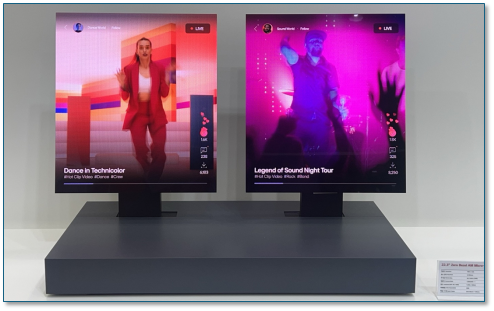
Figure 2 - LG's micro-LED module - Source: LG
 RSS Feed